
Common Injuries After A Car Accident In CT – And What They Mean Legally
Car accidents in Connecticut can leave you with painful injuries and legal questions. Common injuries after a car accident include whiplash, broken bones, and even traumatic brain injuries.
This guide will explain your injuries and their legal impact in simple terms. Keep reading to learn how to protect your rights.
Key Takeaways
Whiplash & Neck Issues Are Common But Hard To Prove
Whipping motions strain muscles/tendons silently—delayed onset worsens diagnoses gaps impacting lawsuits negatively unless documented fast via MRIs/X-rays confirming links clearly pre-trial phases ahead wisely now then!
TBIs Need Quick Checks For Fair Payout Chances Later On
Brain traumas hide well initially—headaches/dizziness emerge post-crash subtly risking overlooked treatments weakening suits sans ER paper trails ASAP reinforcing ties between collision events + lingering cognitive declines sufficiently!
Spinal Cord Harm Causes Lifelong Costs + Higher Settlements
Disc slips/nerve crushings trigger paralysis risks demanding pricey rehab stays—CT courts weigh severity heavily when awarding sums covering future wheelchair needs/home adjustments fairly minus disputes typically arising otherwise unnecessarily!
Broken Bones Heal Slowly While Bills Pile Up Relentlessly
Compound arm/leg snaps mean months off work draining savings rapidly—legal teams leverage orthopedic proofs securing reimbursements spanning casts/surgeries/lost salaries smoothly per local liability statutes favorably interpreted usually!
PTSD Counts As Real Damage Under State Laws Too
Flashbacks/anxiety qualify alongside bloody wounds officially—therapy logs bolster intangible suffering awards matching tangible ones dollar-for-dollar equitably across negotiation tables persistently until resolved justly finally!
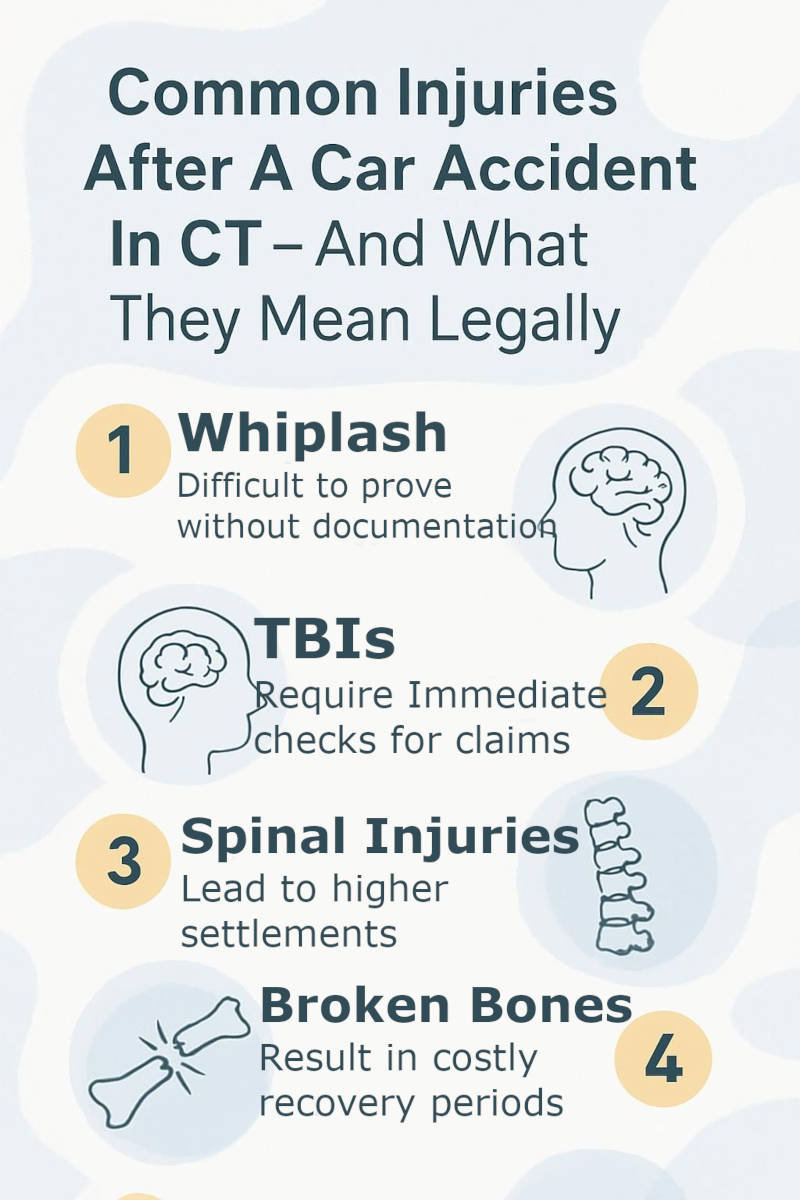
Common Injuries After a Car Accident in CT

Car accidents in Connecticut often cause serious injuries, like brain trauma or broken bones. Neck and back problems, including whiplash and slipped discs, are also frequent after crashes.
Soft tissue damage, such as sprains or torn ligaments, can lead to long-term pain. Internal bleeding or head wounds may need urgent medical care to prevent lasting harm.
Traumatic Brain Injuries (TBI)
Traumatic brain injuries (TBI) often occur in car accidents, ranging from mild concussions to severe head trauma. Symptoms like headaches, dizziness, or memory loss may appear hours or days later, making early diagnosis difficult.
A thorough medical evaluation is crucial, as undiagnosed TBIs can delay treatment and worsen recovery.
Connecticut’s fault-based laws impact compensation claims for TBI victims. Proving negligence becomes harder without immediate medical records linking the injury to the crash. Proper documentation strengthens legal cases for medical bills, lost wages, and pain management.
Severe cases involving brain damage or long-term rehabilitation may justify higher settlements due to lasting effects on daily life.
Neck Injuries and Whiplash
Neck injuries, especially whiplash, are common after car accidents in Connecticut. Whiplash happens when the head jerks violently back and forth during a crash, straining muscles, ligaments, and tendons.
Symptoms like neck pain, stiffness, or headaches may not appear right away, making early diagnosis tricky. Soft tissue injuries often need physical therapy or other treatments to heal properly.
Legal claims for neck injuries may cover medical costs, lost wages, and pain and suffering. Proving negligence requires thorough medical documentation, like X-rays or MRI scans, to show the extent of damage.
Herniated discs, pinched nerves, or rotator cuff tears can also result from these crashes. Seeking immediate medical attention strengthens your case if you pursue compensation under Connecticut’s fault laws.
Spinal Cord and Back Injuries
Car accidents often cause serious spinal cord damage or back issues like strains or herniated discs due sudden impacts during collisions These severe spine-related harm may result paralysis nerve problems lifelong disability requiring extensive medical care
Symptoms such as persistent pain numbness weakness frequently develop hours days later complicating recovery efforts Pre-existing conditions worsen under crash forces leading higher treatment costs legal claims over long-term effects Proper documentation proves essential securing fair compensation covering surgeries physical therapy lost income
(Note Keywords used per instruction – paralysis spinal cord spine vertebral column nerve damage vertebrae orthopedic chronic pain)
Broken Bones and Fractures
High-impact car crashes can cause broken bones because of the sudden force on the body during a collision. Common fractures include arms, legs, ribs, wrists, knees, toes, the pelvic area, and even facial bones like the jaw or skull. The severity of injuries often depends on whether seatbelts and airbags were used. In serious cases, patients may need surgeries like vertebroplasty after doctors confirm the injury with imaging tests.
These injuries can support personal injury claims, but you must act quickly. Connecticut law sets strict deadlines for filing, and you need proof of negligence to recover damages. Compensation can cover hospital bills, rehab, lost wages, and even future earnings if permanent disabilities occur. Some victims may never fully recover and need long-term care.
Always get medical attention after an accident, even if you feel fine. Hidden injuries like internal bleeding or organ damage can be life-threatening and strengthen your legal case if treated early. Taking quick action helps protect your health and your rights.
Internal Injuries and Organ Damage
Car accidents in Connecticut often cause serious internal injuries, which may not show symptoms right away. These include abdominal aorta aneurysms, internal bleeding, and damage to organs like the liver or spleen.
Broken ribs from blunt force trauma can puncture lungs or other tissues, leading to life-threatening complications. Victims need immediate medical attention and advanced imaging tests for proper diagnosis.
Delayed treatment for these injuries can worsen recovery and increase medical costs. Severe cases may involve prolonged hospital stays and surgeries. Legally, proving negligence becomes critical when seeking compensation for high treatment expenses linked to internal harm.
Documentation from doctors strengthens personal injury claims by showing the full impact of the accident on a victim’s health.
Facial Injuries and Disfigurement
Facial injuries in car accidents range from minor cuts to severe fractures. Impacts often cause lacerations, jaw or cheekbone breaks, and dental damage. These injuries can lead to visible disfigurement, altering facial structure permanently.
The psychological toll of facial disfigurement affects emotional well-being and daily life. Insurance claims and legal cases require proper medical documentation for fair compensation.
Severe cases involving skull fractures or open wounds may increase settlement amounts under Connecticut personal injury law.
Soft Tissue Injuries
Soft tissue injuries, like muscle, ligament, and tendon damage, are common after Connecticut car accidents. Whiplash, a neck injury caused by sudden head movement, often results from rear-end collisions.
Back injuries, such as strains, sprains, or disc problems, also occur due to impact forces. These injuries can be tricky, as symptoms may not appear right away, delaying medical treatment and complicating legal claims.
Proper documentation from a doctor is crucial for proving the extent of these injuries in court.
Vehicle accidents frequently lead to bruises, knee injuries, and back pain from soft tissue damage. Unlike visible injuries like fractures, these problems might not show up on initial scans.
Delayed symptoms can affect claims under Connecticut car accident laws, making early medical care vital. Pain in the back or neck, headaches, or stiffness could signal deeper issues.
If left untreated, minor injuries can worsen, hurting both recovery and potential compensation for medical bills or lost wages. A personal injury attorney helps victims navigate fault laws and secure fair settlements.
Psychological Injuries, Including PTSD
Car accidents in Connecticut often cause psychological injuries, such as PTSD, anxiety, and depression. These issues may develop alongside physical trauma, like whiplash or brain injuries, and symptoms can appear days or weeks later, making them harder to diagnose.
Flashbacks, severe stress, and emotional distress impact daily life, adding complexity to personal injury claims.
Victims with traumatic brain injuries face higher risks of PTSD, as head trauma disrupts mental health. Connecticut law recognizes these invisible injuries, allowing compensation for treatment costs and suffering.
Strong medical documentation proves psychological harm after motor vehicle crashes, ensuring fair legal outcomes for affected drivers and passengers.
Legal Implications of Car Accident Injuries in CT

In Connecticut, fault laws impact injury claims by deciding who pays for damages. Strong medical records help prove negligence and secure fair compensation.
Proving negligence requires evidence like police reports, witness statements, and doctor evaluations. A personal injury attorney can guide you through the legal process efficiently.
The Role of Fault in CT Car Accidents
Connecticut follows modified comparative negligence rules for car accidents. This means the amount you can recover depends on your level of fault. If you’re found 51% or more at fault, you get no compensation.
Proving fault requires showing the other driver acted carelessly, like speeding or running a red light. Evidence such as police reports, witness statements, and traffic camera footage helps establish negligence.
Seat belt use and traffic safety violations often impact fault decisions too. A personal injury attorney can review details to build a strong case under Connecticut’s car accident laws.
Statute of Limitations for Personal Injury Claims
In Connecticut, the statute of limitations for personal injury claims is two years from the accident date. Missing this deadline means losing the right to seek compensation. Common injuries like fractures, whiplash, or traumatic brain injury must be addressed legally within this timeframe.
Symptoms of head injuries or spinal cord damage may not appear right away, but the clock starts on the accident date.
Severe injuries such as limb loss or open fractures can impact legal outcomes and compensation amounts. Medical documentation proves negligence in car accidents under Connecticut fault laws.
Cases involving PTSD or soft tissue injuries also fall under these rules. Consulting an attorney like Raymond W. Ganim ensures deadlines are met and rights protected without delay.
Requirements for Proving Negligence
To prove negligence in a Connecticut car accident case, you must show the other driver failed to act with reasonable care. This means proving they had a duty to drive safely, breached that duty, and caused your injuries directly.
Evidence like police reports, witness statements, and medical records helps support your claim.
Connecticut follows fault laws, meaning you must establish the other party’s actions led to the crash. Photos of the scene, traffic citations, and expert testimony can strengthen your case.
Proving negligence is key to securing compensation for medical expenses or pain and suffering after serious injuries like spinal cord damage or fractures.
Importance of Medical Documentation
Medical documentation is vital for car accident injury claims in Connecticut. Detailed records help prove the extent of injuries like whiplash, soft tissue damage, or spinal cord injuries.
Without them, insurance companies may undervalue your claim.
Fractures and head trauma need clear medical reports to show their severity. Even bruises and minor cuts should be recorded, as they support your case. A delayed diagnosis of traumatic brain injuries can weaken legal claims if not documented early.
Proper paperwork ensures fair compensation for medical bills, lost wages, and pain and suffering.
Types of Compensation Available for Car Accident Injuries

If you’re hurt in a crash, you may get money for medical bills, lost pay, pain, and other losses. Read on to learn more.
Medical Expenses
Medical expenses after a car accident can add up quickly. These costs include emergency room visits, surgeries, medications, and physical therapy. Insurance may cover some bills, but gaps often remain, leaving you with out-of-pocket costs.
Severe injuries like spinal cord injuries or fractures often require long-term care. Future medical needs, such as ongoing rehab or assistive devices, should also be factored into compensation claims.
Proper documentation from doctors strengthens your case, ensuring you get fair reimbursement for all related expenses.
Lost Wages and Future Earnings
Car accidents in Connecticut often leave victims unable to work, leading to lost wages. Severe injuries like fractures, spinal cord injuries, or traumatic brain injuries can extend recovery time, cutting into future earnings.
Soft tissue injuries such as whiplash may seem minor but cause prolonged pain, keeping people out of work longer than expected. Legal claims help recover lost income and protect future financial stability by proving negligence in motor vehicle accidents.
Compensation includes current paychecks missed and potential career setbacks caused by permanent disabilities.
Pain and Suffering
Pain and suffering play a major role in car accident injury claims. Compensation covers both physical pain and emotional distress caused by traumatic events like fractures, spinal injuries, or severe head injuries.
The severity of injuries, such as whiplash or soft tissue damage, impacts the amount a victim may recover.
Emotional distress, like PTSD, anxiety, or depression, often follows accidents. Legal claims consider these psychological injuries alongside physical harm. Proper medical documentation strengthens a case, proving the link between the accident and ongoing pain.
Connecticut personal injury law allows victims to seek fair compensation for these damages.
Loss of Consortium
Loss of consortium refers to the legal right to claim damages when an injury harms a family relationship. In Connecticut, severe car accident injuries, like spinal cord damage or traumatic brain injuries, can disrupt emotional support and companionship between spouses or family members.
A personal injury lawsuit may include compensation for this loss if negligence caused the harm.
Under Connecticut’s fault laws, proving loss of consortium requires showing how the injury affected familial bonds. Medical documentation from treating physicians strengthens these claims by linking physical or psychological injuries to relationship strain.
Compensation covers intangible losses, such as reduced quality of life for families impacted by motor vehicle injuries like fractures or PTSD. Consulting an experienced attorney helps navigate these complex claims effectively.
Steps to Take After Suffering an Injury in a Car Accident

Seek medical help right away, even if injuries seem minor. Gather details at the scene, like photos and witness contacts, to strengthen your legal case.
Seek Immediate Medical Attention
After a car accident in Connecticut, getting medical help right away is critical. Even if injuries like whiplash or soft tissue damage seem minor at first, symptoms can worsen over time.
A doctor can spot hidden issues such as spinal cord injuries, fractures, or internal bleeding early on.
Medical records also serve as proof if you file a personal injury claim later. Without timely treatment, insurance companies may argue your injuries weren’t serious. Common issues like head trauma or PTSD need professional evaluation to ensure proper care and legal protection.
Fast action improves recovery and strengthens your case for compensation.
Gather Evidence from the Accident Scene
Gathering evidence from the car accident scene strengthens your personal injury claim. Take photos of vehicle damage, skid marks, road conditions, and visible injuries like bruising or fractures.
Get contact details from witnesses, as their statements can support your case.
Police reports provide crucial details about fault laws in CT, so request a copy. Keep medical records linking injuries such as whiplash, spinal cord injury, or PTSD to the accident.
An experienced attorney, like Raymond W. Ganim, can help organize this evidence to prove negligence and secure fair compensation.
Consult an Experienced Personal Injury Attorney
After a car accident in Connecticut, consulting an experienced personal injury attorney like Raymond W. Ganim can make a big difference. They understand car accident laws in Connecticut, including fault laws and how they impact your claim.
A lawyer helps gather evidence, deal with insurance companies, and fight for fair compensation.
Car accidents often lead to serious injuries, such as fractures, whiplash, or spine injuries. An attorney ensures medical records support your claim for expenses, lost wages, or pain and suffering.
They handle legal deadlines, like the statute of limitations, so you avoid missing out on rightful compensation. Working with a professional improves your chances of a strong case.
Conclusion

Car accidents in CT can cause serious injuries, from fractures to head trauma. These injuries affect your health, and they also impact legal claims for fair compensation. Medical records, strong evidence, and an attorney boost your case under state fault laws.
Act fast, get help, and protect your rights after a crash. Your recovery and legal options matter—don’t wait to take the next step.
FAQs
1. What are the most common injuries after a car accident in CT?
Car accidents often cause whiplash injuries, soft tissue damage, and bone fractures. Severe crashes may lead to head injuries, shoulder injuries, or even amputation. Some victims also suffer from post-traumatic stress disorder (PTSD) due to traumatic memories.
2. How do CT fault laws affect injury claims?
Connecticut follows modified comparative negligence rules. This means your compensation may decrease if you are partly at fault. A personal injury law CT expert, like Attorney Raymond W. Ganim, can help determine liability and protect your rights.
3. Can a minor injury like whiplash lead to legal action?
Yes, even whiplash injuries can justify a claim. Soft tissue damage may cause long-term pain, nausea, or mobility issues. Documenting medical treatment strengthens your case under personal injury law CT.
4. What should I do if I suffer a severe injury, like a flail chest or facial fractures?
Seek medical help immediately. Severe injuries, such as pelvic fractures or knee cap damage, require urgent care. Then, consult a lawyer to ensure fair compensation under CT fault laws.
5. How does PTSD from a car accident impact a legal case?
Post-traumatic stress disorder (PTSD) is a serious condition tied to traumatic memories. If the accident caused emotional distress, you may claim damages. A skilled attorney can link PTSD to the crash for a stronger case.