
How Long Do I Have To File A Slip and Fall Claim In Connecticut
Slip and fall accidents can leave you with painful injuries and mounting medical bills. In Connecticut, you have two years from the date of your accident to file a personal injury claim.
Attorney Raymond W. Ganim can help you understand your legal rights and guide you through the claims process. Don’t wait until it’s too late.
Key Takeaways
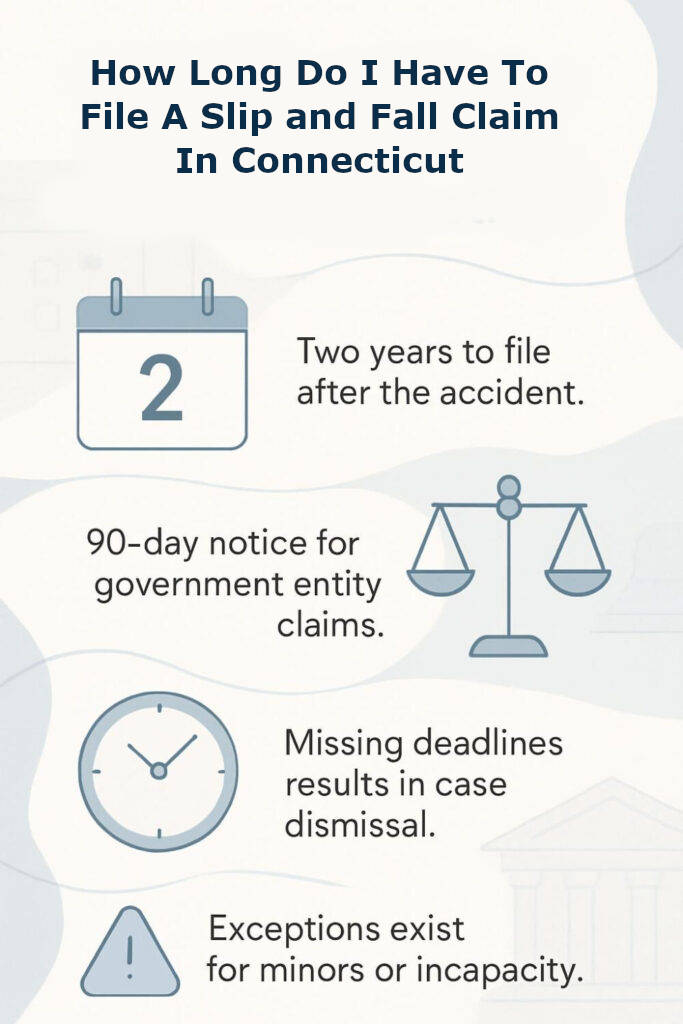
- You have two years from your accident date to file a slip and fall claim in Connecticut.
- Claims against government entities require notice within 90 days, much shorter than the standard deadline.
- Missing the filing deadline means courts will dismiss your case, no matter how strong your evidence is.
- Some exceptions may extend the time limit, such as cases involving minors or mental incapacity.
- Taking quick action helps protect your rights – seek medical care, report the accident, gather evidence, and contact a lawyer promptly.
Connecticut’s Statute of Limitations for Slip & Fall Claims
Connecticut law sets a strict two-year deadline for filing slip and fall claims. This means injured parties must start their legal action within two years from the date of their accident.
I once helped a client who waited 23 months to contact me, leaving us scrambling to gather evidence and file properly. The clock starts ticking on the day you fall, not when you notice your injuries.
Missing this deadline almost always results in your case being dismissed, regardless of how strong your evidence might be. The court system follows these time limits very strictly to ensure cases proceed in a timely manner.
When Does the Statute of Limitations Begin?
The clock starts ticking on your slip and fall claim from the date of your accident. This means if you fell on January 1, 2023, you have until January 1, 2025, to file your lawsuit in Connecticut.
I once helped a client who didn’t realize her time was running out until she called me 18 months after her fall. The statute doesn’t wait for your injuries to heal or for you to finish medical treatment.
Some people mistakenly think the time limit begins when they discover the full extent of their injuries, but that’s incorrect for most slip and fall cases.
Special rules may apply if you couldn’t reasonably discover your injury right away. For example, if you fell but only noticed back pain weeks later that doctors linked to your accident, the court might consider when you first noticed symptoms.
This “discovery rule” rarely applies to slip and fall cases since most injuries show up immediately. The law expects you to act with reasonable diligence in pursuing your claim after an accident occurs.
Exceptions to the Statute of Limitations
Connecticut law recognizes several situations where the standard two-year statute of limitations for slip and fall claims might be extended. These exceptions give injured parties more time to file their lawsuits under specific circumstances.
- The discovery rule allows extra time if you couldn’t reasonably discover your injury right away. Some injuries show symptoms months after the accident occurs.
- Minors (people under 18) often have extended time limits. The statute of limitations typically doesn’t start until they reach adulthood.
- Mental incapacity can pause the time clock if you were unable to understand your legal rights due to your mental state after the injury.
- Fraudulent concealment extends deadlines if a property owner hid evidence or facts about your accident. This protection stops at-fault parties from escaping liability through dishonesty.
- The defendant leaving the state can pause the countdown. Connecticut courts won’t count time periods when the person you’re suing isn’t present in the state.
- Military service members receive special protections under federal law. Active duty status can pause legal deadlines while you serve our country.
- Ongoing medical treatment sometimes extends filing deadlines in certain cases. Courts may consider continuous treatment for the same injury as part of one event.
- Written agreements between parties can modify time limits in some situations. Both sides must clearly consent to any changes in writing.

Filing a Claim Against a Government Entity
Filing claims against government bodies in Connecticut follows special rules with shorter deadlines. These claims need quick action to protect your legal rights after a slip and fall on public property.
- You must file a notice of claim with the government entity within 90 days of your slip and fall accident, much shorter than the standard two-year limit.
- The notice must include specific details about the incident date, location, injuries, and how the government’s negligence caused your fall.
- Each town, city, or state agency may have their own forms and procedures for filing these notices.
- Missing this 90-day deadline often means losing your right to seek compensation from the government entity.
- After filing the notice, the government has time to investigate and respond to your claim before you can file a lawsuit.
- Government entities enjoy certain immunities that can limit their liability in slip and fall cases.
- The compensation caps for claims against government bodies are often lower than those for private property owners.
- You need to identify the exact government entity responsible for the property where your fall happened.
- Public sidewalks, parks, schools, libraries, and municipal buildings all fall under different government jurisdictions.
- Many people lose valid claims simply because they wait too long to notify the proper government office.
Statute of Limitations for Wrongful Death Claims
Families who lose a loved one in a fatal slip and fall accident have two years to file a wrongful death claim in Connecticut. This time limit starts from the date of death, not the accident date.
The law allows certain family members like spouses, children, or parents to seek compensation for funeral costs, lost income, and emotional suffering. Missing this deadline means courts will likely dismiss your case without hearing the facts.
Connecticut courts strictly enforce these time limits, so quick action helps protect your legal rights after such a tragic loss.
Statute of Limitations for Defective Product-Related Injuries
Connecticut law sets a different timeline for claims based on defective products that cause slip and fall injuries. You have three years from the date of injury to file a product liability claim against manufacturers or sellers.
This applies if your fall happened because of a broken handrail, faulty floor material, or dangerous cleaning product. I once helped a client who slipped on a newly waxed floor that didn’t include proper warning labels.
We filed within the three-year window and secured fair compensation. The Connecticut Product Liability Act governs these cases, making them distinct from standard premises liability claims.

Steps to Take After a Slip & Fall Accident to Protect Your Claim
Taking quick action after a slip and fall accident can make a big difference in your claim’s success. Your prompt response helps gather vital evidence and meets legal deadlines in Connecticut.
- Seek medical attention right away, even if injuries seem minor. Some injuries show symptoms days later, and medical records link your injuries to the accident.
- Report the accident to the property owner, manager, or staff. Ask for a written incident report and get a copy before leaving.
- Take photos of the accident scene, including the hazard that caused your fall. Capture images of your injuries, wet floors, broken steps, poor lighting, or any dangerous condition.
- Collect contact information from witnesses who saw your fall. Their statements can support your version of events later.
- Save the shoes and clothes you wore during the accident. These items might show evidence of substances that caused your fall.
- Document everything about your accident and injuries in a journal. Note pain levels, medical treatments, and how injuries affect your daily life.
- Avoid giving recorded statements to insurance companies without legal advice. Insurance adjusters may use your words against your claim.
- Contact a personal injury attorney familiar with Connecticut slip and fall cases. Most offer free consultations to evaluate your claim.
- File your claim within Connecticut’s two-year statute of limitations. Missing this deadline could bar you from receiving compensation.
- Gather all medical bills, pay stubs, and expense receipts related to your injury. These documents help calculate your total damages.
Consequences of Filing a Claim After the Deadline
Filing a slip and fall claim after the statute of limitations expires almost always results in your case being dismissed. Courts strictly enforce these deadlines and will likely throw out your lawsuit if you miss the two-year time limit in Connecticut.
I once helped a client who waited 25 months to file, and despite having clear evidence of store negligence, the judge immediately dismissed the case. The defense attorney simply filed a motion to dismiss based on the expired statute, and my client lost all rights to compensation for her $12,000 in medical bills.
The legal system offers almost no recourse once you miss the filing deadline. Your right to seek damages for injuries, medical costs, lost wages, and pain simply vanishes. Even with a perfect case and clear fault by the property owner, courts will not hear your claim.
This harsh reality makes prompt action essential after any slip and fall accident. Many injury victims don’t realize that gathering evidence, obtaining medical records, and negotiating with insurance companies takes significant time before a lawsuit can be properly filed.
Conclusion
Time limits matter for slip and fall claims in Connecticut. You must act within two years from your accident date to protect your legal rights. Missing this deadline can block your path to fair payment for medical bills and lost wages.
Talk to a personal injury lawyer right away after your accident. A good lawyer will guide you through each step and help you file on time to get the money you deserve.
FAQs
1. How long do I have to file a slip and fall claim in Connecticut?
In Connecticut, you have two years from the date of your accident to file a slip and fall claim. This time limit is called the statute of limitations, and it’s very strict. Missing this deadline usually means losing your right to seek money for your injuries.
2. Can I still file a claim if I waited more than a year after my fall?
Yes, you can still file as long as you’re within the two-year time frame. But waiting too long can make your case harder to win. Evidence may disappear, witnesses might forget details, and insurance companies often question delays.
3. Are there any exceptions to the two-year filing deadline?
Some rare situations might extend your time to file. If you were a minor when you fell, or if your injury wasn’t discovered right away, you might get more time. Talk to a lawyer about your specific case.
4. What should I do right after a slip and fall accident?
Take photos of where you fell, get names of witnesses, and report the accident to the property owner. See a doctor right away, even if you feel fine. Keep all medical records and bills. These steps help build a strong claim before time runs out.